Department of Social and Preventive Medicine
Research. Prevention. Community.

Resources


SPM - The Department

Social and Preventive Medicine has a long and productive history in epidemiologic research. Extensive facilities are available for all stages of epidemiologic research: interviewee ascertainment, clinical space for conduct of interviews and specimen collection, laboratory facilities for processing of biological specimens, a biological specimen banking facility, facilities for data entry, data processing and data analysis. The University at Buffalo is equipped with sophisticated computer and health sciences library facilities. Its well-known, long-established School of Medicine and Biomedical Sciences is affiliated with many hospitals and institutions in and around the Buffalo area. Our affiliation with Roswell Park Cancer Institute and their faculty and research staff have augmented our programs immensely. Our graduates now help to provide important journal information, links and connections to various sites that aid in our efforts to study cancer epidemiology and its effects on society.

[ Top of Page ]


SPM Clinical Facilities

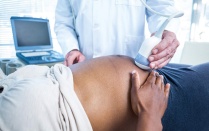
SPM is located on the Health Sciences Campus of the University at Buffalo and is easily accessible via public transportation. The Center for Preventive Medicine (clinical facility) occupies a space of approximately 12,000 square feet where participants in studies conducted by Departmental faculty can be examined and interviewed. The clinical facility includes: two reception/waiting areas, a blood drawing room, fifteen exam/interview rooms (including two fully equipped dental offices), four conference/meeting rooms, a fully equipped kitchen (for dietary intervention studies), diagnostic facilities [two dual energy x-rays absorptiometers (Hologic 4500 and Hologic Discovery A), X-ray equipment, ultrasound equipment (AU5 Ote-Biosound with a broad arrays of probes), a 2170 Vitolagraph spirometer, two computerized Florida probes for assessment of gingival detachment]. Each of the soundproof interview rooms is equipped with a computer programmed for the interview, an examining table, a standard mercury sphygrnomanometer, a stethoscope, Holtain Kahn abdominal calipers, a height measurement board, and a balance scale. Laptop computers, digital scales, and sphygmomanometers are available for interviews to be conducted in participants' homes. Home draw phlebotomy materials and staff are available to collect blood specimens from homebound individuals, or individuals unwilling to travel to the clinic. In addition, the clinical facility includes a data management area with computers dedicated for data entry and management, optical scanners and a fully equipped laboratory for the processing of biological specimens. Facilities are also available for telephone recruitment of potential interviewees.

[ Top of Page ]


SPM Biological Specimen Bank (Biobank)

The department has established a repository for specimens collected as part of ongoing epidemiological studies. The specimens are stored both in -80 °C freezers and in cryogenic containers, immersed in liquid nitrogen (-196 °C). A complex and secure computerized mapping system has been developed to track specimens; a digital image scanner (bar code reader) used with the electronic databases. Systems are in place for continuous monitoring of temperature inside the freezers; an automated system is available for the delivery of liquid nitrogen to the cryogenic containers in order to maintain the desired temperature. For the electric freezers, a liquid CO₂ back-up system is available in case of mechanical or power failure. All freezers are within the confines of the department with an alarm system monitored by SPM personnel and the University at Buffalo Police Department.

[ Top of Page ]


SPM Computing

The School of Public Health and Health Professions computer lab is available to graduate students, faculty and staff. There are 72 computers running Windows™ XP SP2 and network printers. The Department maintains its own computer lab consisting of 6 computers with Windows™ XP SP2, laser printer and scanner. Also available are a slide maker, plotter, color laser printer and multimedia projectors. Software packages supported either by the university or by the department include Microsoft Office, SAS, SPSS, ARCGIS and EndNote.

[ Top of Page ]


UB Computing

Ranked as one of the most wired universities in the nation, the University at Buffalo's computer facilities, including its Center for Computational Research - one of the top supercomputing locations in the Country - augment individual departmental facilities and provide additional technical support. Computing and Information Technology (CIT) is the University's central computing organization and supports a diverse, technology-rich environment to meet the growing demand for larger system (timesharing) services, data network connections, telecommunication services, workstations, microcomputers and other technology concerns including student access and instructional technology support. UB provides free unlimited high-speed access to the internet, e-mail accounts, a full suite of productivity software, and printing--including high-quality graphic printing. All of the regional teaching hospitals and RPCI are linked by computer to the university.

[ Top of Page ]


UB Library

UB's library system contains more than 3.2 million volumes and 5.25 million microforms. The libraries subscribe to 26,444 journals and periodicals. The Health Sciences Library has holdings including 1,500 current biomedical journal subscriptions, over 300,000 volumes of books and journals, close to 1,500 online journal subscriptions, over 2,000 audiovisual programs, and a growing array of electronic information resources, including subscriptions to many electronic bibliographic databases such as MEDLINE, CINAHL, and Web of Science. All online resources are available remotely to current faculty, staff, and students. Assistance with library resources, services, and policies is provided at the Reference Desk, by phone, and electronically. Librarians are also available to provide Research Consultation Service for faculty and students. Information Management Education (IME) provides library instruction on various databases and topics including Basic and Advanced Ovid, E-Journals, EndNote, Web of Science, and PDAs. In addition, HSL's Information Delivery & Access Services (IDS) provides interlibrary loan service to the university's faculty, staff, and students.

[ Top of Page ]


UB Facilities available to all faculty and trainees

Histology laboratory in the Department of Pathology & Anatomical Sciences has light and electron microscopic capabilities (including scanning electron microscope) and histology tissue preparation facilities; Confocal microscope, fluorescence microscopes, fluorescent-activated cell sorting (FACS), real-time polymerase chain reaction thermal cycler, and digital phosphoimaging are in the Confocal Microscopy Core Facility staffed by 1 full-time Director and one part-time technical assistant. The University at Buffalo and Roswell Park Cancer Institute (RPCI) support jointly a Gene Microarray facility able to generate unique arrays and process samples with commercial Affymetrix chips. Also available to the University at Buffalo faculty are the Transgenic Animal Facilites at Roswell Park Cancer Institute capable of generating transgenic and knock-out animals for our investigators. The Research Institute on Addictions (RIA) has a large faculty with expertise in the design and execution of studies related to use of alcohol, cigarettes and other addictive drugs. These researchers also have expertise in measurement methodology for these substances and in the recruitment of study participants from special populations where use is high. Several Institute faculty members have collaborated extensively with SPM faculty.

[ Top of Page ]


SPHHP Resources

Available to graduate students, faculty and staff, go to the School of Public Health and Health Professions' (SPHHP) Resources page.

[ Top of Page ]